
 Government of Sint Maarten
Public Health, Social Development & Labor
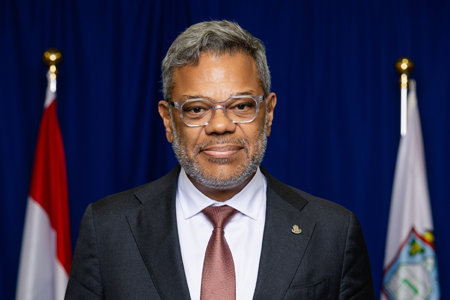
Dr. Luc F. E. Mercelina· Acting Minister of Public Health, Social Development & Labor
The ministry runs Sint Maarten's public health, social welfare and labor systems, spending most of its money on health insurance and medical/welfare assistance for the uninsured and vulnerable, while funding prevention, social services and job-placement programmes.
Spending by cost category
- Cg 56M51%
- Cg 16M15%
- Cg 1M1%
- Cg 36M33%
Spending outlook
Capacity to deliver
Strategic objectives
- 01Public Health: Improve the population's access to healthcare and the quality and safety of care (standards, protocols, training, professionalism), aligned with NDV 1.6 efficient high-quality healthcare and NDV 1.7 a physically and mentally healthy population.
- 02Public Health: Reduce the prevalence of non-communicable diseases (NCDs) and communicable diseases (CDs) through prevention, awareness campaigns and immunization, and raise community awareness of Emergency Medical Services (EMS).
- 03Public Health: Improve data collection to support evidence-based policy development.
- 04Social Development: Improve access to social services for vulnerable groups, ease socio-economic burdens in the community, and improve disaster preparedness and response under ESF-7.
- 05Labor: Improve job placement for registered job seekers, strengthen labor relations between employers and employees, and increase the employability of recipients of financial or medical assistance.
- 06Implement reforms under the Sint Maarten Country Package (TWO projects) to build a resilient economy and a robust, affordable social security system.
Key programmes & projects
Strengthened health-sector oversight, a National Strategic Plan for Mental Health, BIG registration and ICT register of healthcare professionals, General Health Insurance (GHI) legislation, CVRM pilot training and Phase 2 pharmaceutical cost containment.
Draft legislation and implementation frameworks for unemployment benefits, integrated work/residence permit procedures, poverty research, financial sustainability of social security, and dismissal policy.
Shelter and support for domestic-violence victims and at-risk youth, empowerment training for vulnerable groups, supported living for homeless seniors, and community outreach.
Support for soup kitchens and food banks, three schools/after-school institutions, a sports activity for ~100 children, and a food discount programme for 100 senior households.
All planned health campaigns carried out per WHO/CARPHA/CDC/PAHO calendars; 10% increase in vaccinated children; expanded testing and screening.
Certified ambulance staff, a 10% increase in inspections, timely international memberships, and continuity of ambulance care per statutory quality requirements.
Indicators & targets
- Number of vaccinated children (Extended Immunization Programme)Target: Increase by 10%
- HIV/AIDS Foundation testingTarget: 400 people tested
- Diabetes Foundation public awareness eventsTarget: At least 300 participants
- 'Let's Get Fit' preventive health project participationTarget: At least 500 participants
- Inspections of healthcare, pharmacies and wholesaleTarget: Number of inspections increased by 10% vs previous year
- Senior support - supported living for homeless seniorsTarget: At least 5 seniors housed
- Homelessness project and crisis responseTarget: 75 people provided with meals and hygiene kits
- Nurses trained for CVRM pilot programme (healthcare reforms)Target: 10-12 nurses trained
- ILO country reports submissionTarget: Timely submission before September 1
Key risks
- Chronic understaffing (~25%, some departments at 50% or less) compounded by brain drain, as retirement and departures cause loss of specialized knowledge and stall or delay projects and activities.
- Limited labor market and uncompetitive government salaries force hiring of under-experienced staff and prevent keeping knowledge and skills up to date, causing delays and staff dissatisfaction; budgeted vacancies may go unfilled, leaving the personnel budget underused.
- Insufficient country-wide financial and physical resources force priority-setting: staff cannot be recruited, resources not procured, or project scope reduced, risking that not all of the population receives necessary services.
- Calamities (hurricanes, COVID-type outbreaks, flooding, extreme heat) disrupt the organization, cancel or delay activities, and raise the cost of living; major-calamity budget impact is considerable but unpredictable.